
If you’ve spent any time with me over the last 18 months, you’ll know I talk about this a lot. I’ve been working with organizations and talking to leaders about what happens when you change how work gets done but don’t change how people are expected to lead it, and I keep coming back to it because I can see where it’s heading. I think 2027 is the year this really blows up. Companies are pouring money into AI, redesigning workflows, bringing in agents and pushing hard for adoption, yet most of them still expect managers to lead their teams exactly the way they did before. If we don’t change what we expect from leaders, and take things off their plate so they actually have the time to lead differently, we’re going to walk straight into the leadership crisis Mercer and Workhuman have been warning about. The work has moved on, but the expectations, the decision-making and the leadership skills haven’t kept up, and I think that’s a big reason so many organizations aren’t seeing the return they were promised.
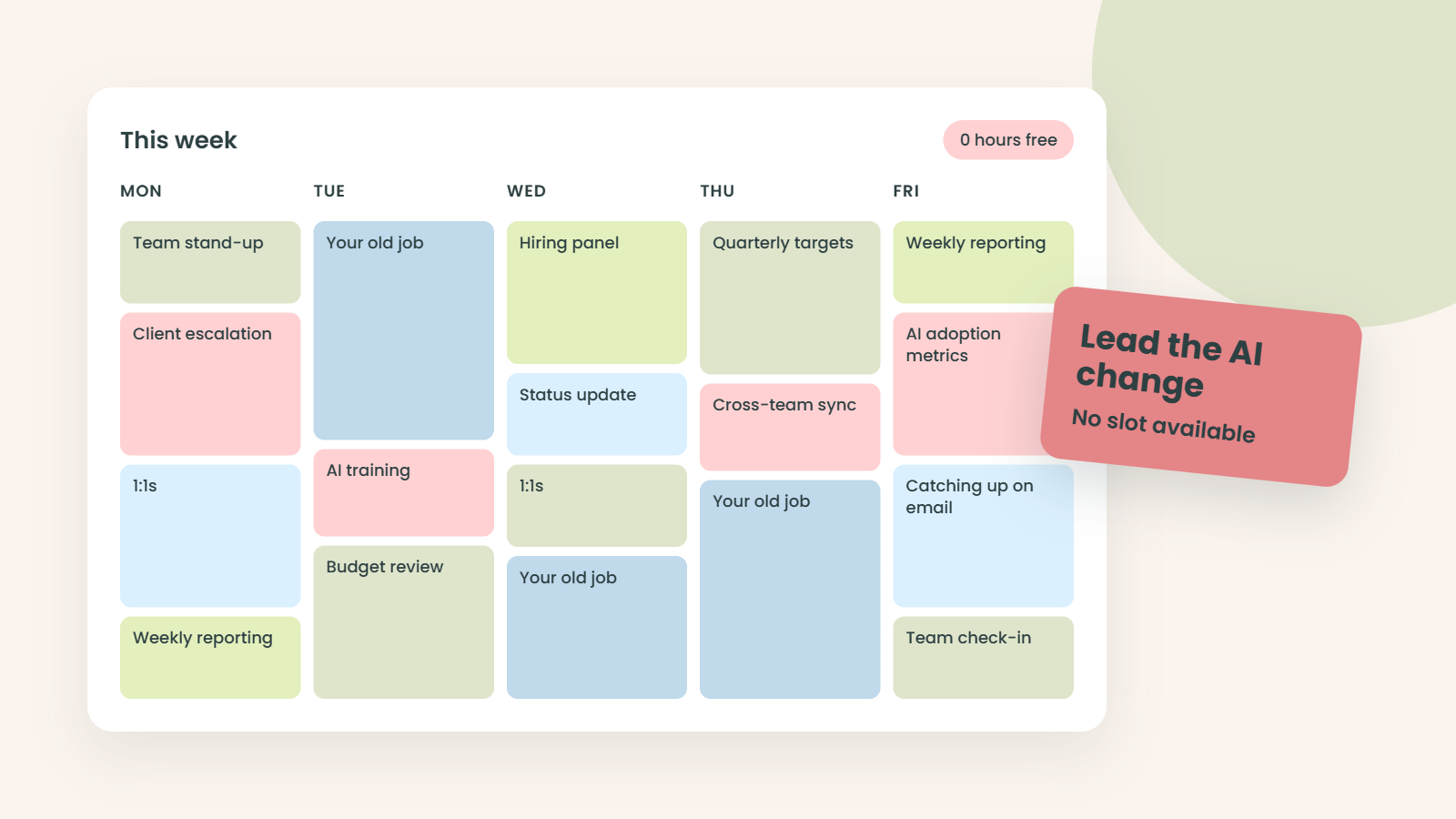
800 AI agents and nobody with the time to connect them
I came across one organization recently that had more than 800 AI agents up and running, with no real increase in overall business output. People were using AI, and using it well. Teams were automating their own work, cutting out repetitive tasks and getting more efficient, but all of it stopped at the edge of each team. Nobody had looked at the work between business units, so individual teams got faster while the organization stayed pretty much where it was.
I don’t think that happened because nobody noticed. Connecting that work means two managers sitting down together, understanding how each other’s teams run and agreeing what changes and who’s accountable for the outcome. That takes time and it takes authority, and most managers I talk to have neither. They’re already running their teams, hitting their own targets and being asked to drive AI adoption on top of everything else, so they optimize what they control and the work in the middle stays exactly as it was. Nobody took anything off their plate to make room for it, and nobody told them it was now part of the job.
What the research is telling us
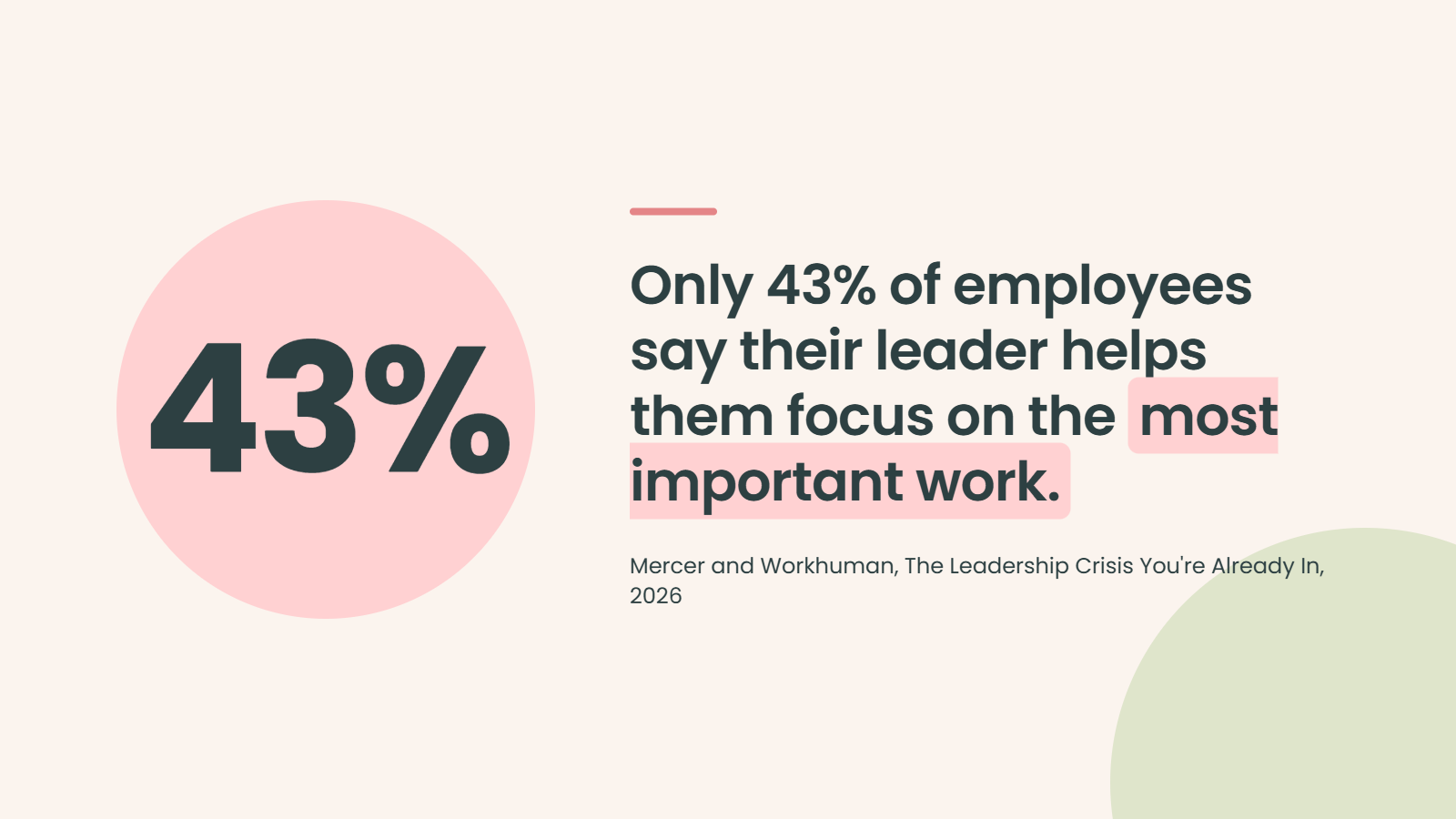
Mercer and Workhuman’s report, The Leadership Crisis You’re Already In, found that only 43% of employees say their leader helps them focus on the most important work. That’s worrying when giving people clarity is a pretty fundamental part of a manager’s job, but it makes me wonder how many of those managers have the clarity, or the headspace, to do it.
Charter’s AI Pulse research shows a similar gap from another angle. Over half of managers (54.7%) said they visibly use AI in their own work, but only 30.4% of employees said they’d actually seen their manager doing it. I wrote about that in my earlier article on manager support and AI and side by side, both studies point to a gap between what managers think they’re giving their teams and what their teams are actually experiencing.
I’ve spoken to plenty of managers who’ve finished their company’s AI training and still don’t know what they’re meant to do differently. They’ve been shown the tools and told to experiment, but their workload hasn’t changed and nobody has explained what leading an AI-enabled team looks like in practice. When I ask leaders whether they feel supported with AI at work, the answer I hear over and over is “kinda.” They’ve had the training, but they haven’t had the time or the help to apply it to their actual job.
You can’t hire your way out of this
This is the point in the Mercer report I agree with most. You can’t recruit your way out of a leadership capability gap, so you have to develop the leaders you already have.
I’ve seen it happen so many times. We promote people because they’re brilliant at their jobs and assume they’ll figure out the leadership part. They’re technically strong, they deliver, everyone relies on them, and then suddenly they’re expected to develop people, delegate and make decisions that affect teams beyond their own, usually while still doing a big chunk of their old job. Now we’re changing the work underneath them too. As AI takes on more of the execution, managers need to apply judgment, understand how their team connects to the rest of the business and help people through a lot of uncertainty. None of that develops just because someone got promoted or sat through a course, and none of it happens if their calendar is already full.
New hires walk straight into the same structures and the same overloaded role anyway, so building this internally is the only real option. That means dedicated resources and protected time, and it means deciding what managers can stop doing. Sometimes it also means giving them an independent coach or advisor, someone with no say in their rating or their next promotion, so they have somewhere to admit what they don’t know and work through the hard decisions.
What I’d ask before buying another training program
Before investing in more training, I’d want to know what’s actually getting in the way. Is it capability, or is it that managers have no time, no authority across functions and a role that’s never been redefined? The answer changes what kind of support makes sense. I’d also measure success by whether decisions are happening faster and teams are working together better, not by who finished a course or logged into a tool.
We keep adding to managers’ plates and expecting the leadership to sort itself out. If we want the return on AI, we have to change what it means to lead and make room for people to do it. If your managers have taken on AI on top of everything else and you’re not seeing the results, message me this week and let’s work out what needs to come off their plate.
Research referenced
Mercer and Workhuman, The Leadership Crisis You’re Already In, 2026.
Charter, Charter AI Pulse, October 2026, research examining AI adoption and support among more than 5,000 people using AI at work.